
Partnerships to ensure lasting impact – The example of EKOenergy and Tonibung
How can partnerships create lasting impact for local communities? And how can climate finance support communities in building long-term energy independence while advancing the Sustainable Development Goals?
These questions are at the core of EKOenergy’s work. Through our Climate Fund, we support projects around the world that turn these ambitions into tangible results, made possible through close collaboration with local NGOs and community organizations that bring deep local knowledge and trusted relationships on the ground.
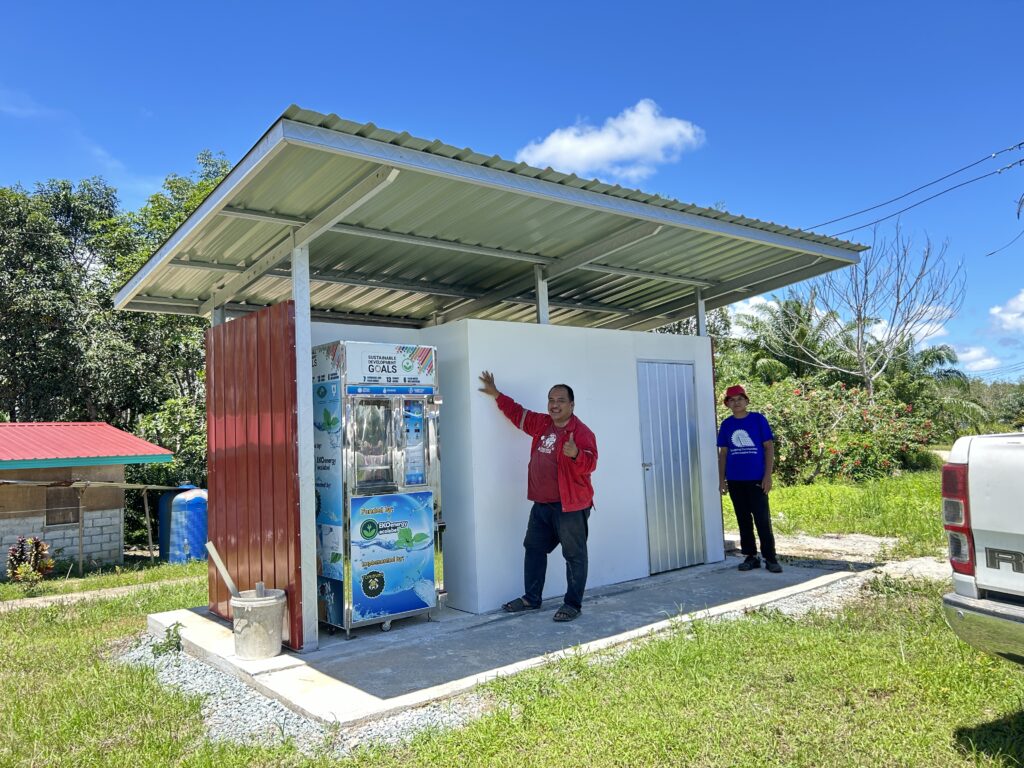
Working closely with local partners allows us to contribute directly to several Sustainable Development Goals (SDGs), including access to affordable and clean energy, improved water management, and more sustainable community development. One of these partners is Tonibung, a Malaysian non-profit organization that has worked with us on several initiatives. Our most recent collaboration took place in Sabah, Malaysia. Their work speaks for itself: Tonibung provides rural communities with access to clean energy through community-based renewable systems, mainly micro-hydro and solar PV. To date, they have completed more than 40 installations across Malaysia.
Beyond energy access, Tonibung, actively promotes sustainable development within Indigenous communities by offering training and appropriate technologies for the productive use of renewable energy. Their strong commitment to environmental protection and community empowerment reflects values that closely align with those of EKOenergy.
Deeds not words – Interview with Tonibung
To better understand their approach and impact, we had the opportunity and pleasure to speak with Tonibung’s founder, Mr. Adrian Banie Lasimbang, and the Director, Alice Jipius. We invited them to share their first-hand experience in the field and reflect on the tangible outcomes of our collaboration. In the following Q&A, they explain how their initiatives support local communities, while also contributing to environmental protection and the preservation of cultural identity in Sabah, Malaysia.
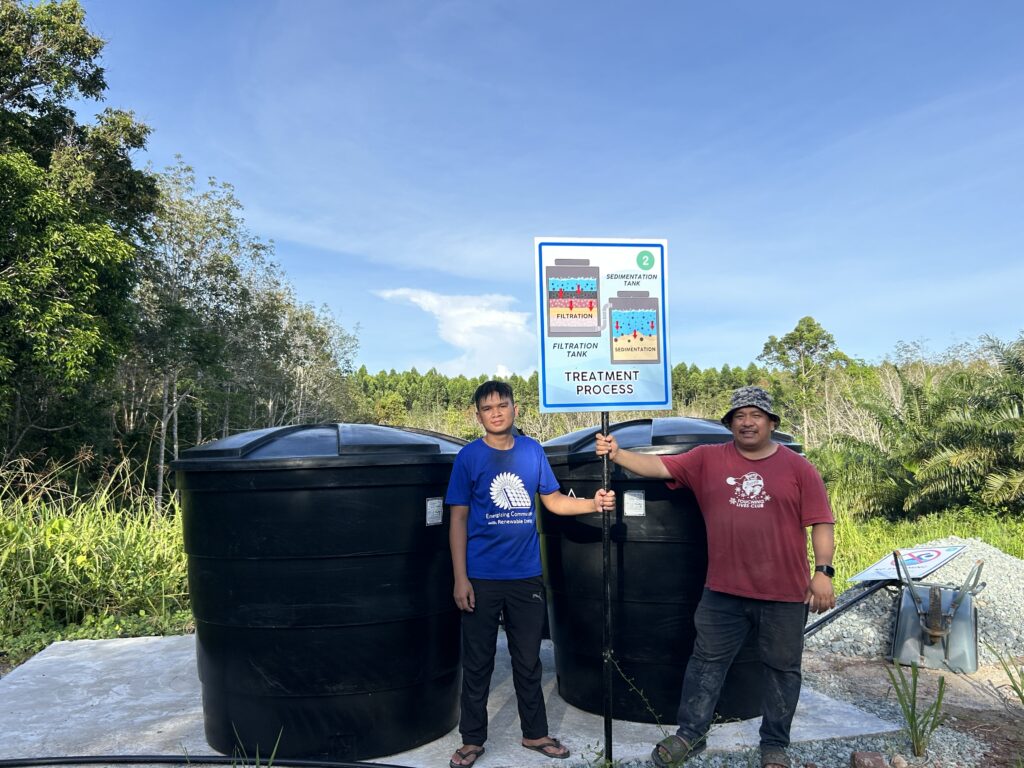
Q: How do solar energy and water filtration systems support environmental protection and forest conservation?
Adrian Banie Lasimbang: “We have been working on the SDGs for many years, focusing mainly on energy and water. Supporting forests and life on land is closely linked to improving irrigation systems for farmers. Solar technology, especially solar pumping, allows farmers to irrigate their fields more efficiently, which benefits both water access and water management. We also work on water conservation, community protocols, watershed management, and mapping, all of which contribute to forest protection and the restoration of reserves.”
Q: How has access to solar energy influenced the community’s traditions, routines, or sense of empowerment?
Adrian Banie Lasimbang: “For the last two projects that we had, it greatly helped a lot, especially for farmers, because they were struggling to correctly irrigate the field. However, the biggest impact actually happened for women,” explains A. B. Lasimbang.
“Before, many had to walk several kilometers every day just to collect water. With the solar-powered pumping and filtration systems, communities now have easier access to safer water, improving both living conditions and health.”
Q: What surprising or unexpected positive changes have you seen when communities gain access to solar power and clean water?
“One of the most noticeable changes is a big reduction in plastic bottle use. Before, the community had to travel to town to buy clean drinking water in bottles. Now, with the filtered water systems, they can use their own bottles, which reduces both waste and soil pollution.” says Alice Jipius.
Moreover, Adrian Banie Lasimbang adds: “The community has also reported better health, with fewer cases of diarrhea and other waterborne illnesses. People feel more confident drinking clean water directly, without needing to boil pond water from the ponds.”
Q: How did you manage to implement the new energy system in a way that respects local traditions and the natural environment?
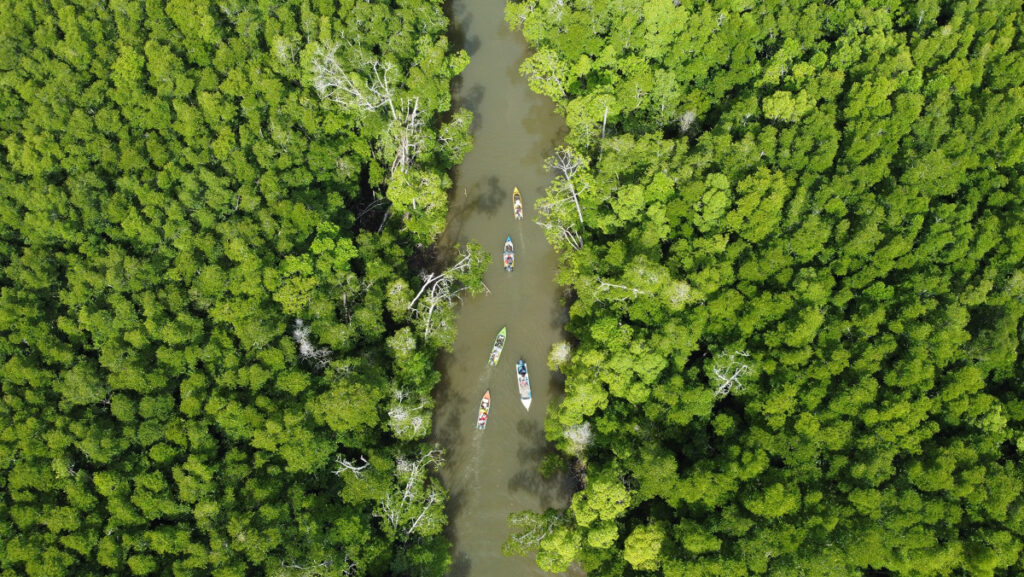
“As an indigenous organisation,” explains A. B. Lasimbang, “we respect the need for free, prior, and informed consent. Before any intervention, we conduct workshops to understand the community’s needs and design projects that respect their culture. We also focus on empowering local champions, building on existing skills and experience. For example, in Kampung Mongkos Pitas, the community had previously tried a gasoline-powered pumping system but faced challenges with fuel, maintenance, and coordination. We helped design a collective, self-maintained system that addresses these issues, listening closely to the community’s aspirations and learning from past attempts to avoid repeating mistakes.”
“Before any intervention, we conduct workshops to understand the community’s needs and design projects that respect their culture. We also focus on empowering local champions, building on existing skills and experience.”
Q: How does the community play a role in managing and protecting both the energy system and the surrounding environment?
Adrian Banie Lasimbang: “When we first implemented the water project, one key challenge was protecting the watershed area while ensuring landowners retained access and rights to their land. The community already had a traditional governance system, so our role was to facilitate dialogue, explain the importance of collective management, and integrate these existing frameworks into the project. We also made sure landowners were fairly compensated, so everyone could benefit without losing control over their land.”
Alice Jipius adds: “Regarding project management, we helped the community elect a committee, a chairman, secretary, treasurer, and maintenance operator. The community agreed to the project after it was presented. We set a cost of 0.20 cents per liter for clean water, much cheaper than bottled water in town. The system is community-run: they collect payments, cover maintenance costs, and manage other expenses such as pond cleaning and filter upkeep. Revenue from water sales ensures the system remains sustainable.”
Concrete action leads to concrete impact
Taken together, this experience shows how access to solar energy and clean water goes far beyond infrastructure alone. It transforms everyday life in tangible ways and shows the central role of community ownership, trust, and participation. From the beginning, projects are shaped through dialogue and consent, grounded in a clear understanding of existing traditional governance systems. Rather than replacing what already exists, the approach builds on it, leveraging local knowledge, empowering community “champions,” and co-designing solutions that respond to real needs and past experiences.
In this sense, sustainability is not only about technology, but also about governance and shared responsibility. Within this broader framework, the partnership between EKOenergy and partners such as TONIBUNG plays a key role in enabling multiple Sustainable Development Goals (SDGs) to be addressed in an integrated way. By combining renewable energy solutions with community-led water systems, these projects contribute to several Sustainable Development Goals, including Clean water and Sanitation, Affordable and Clean energy, Climate action, Partnerships for the Goals and Life on land.
We deeply value collaborations with organizations like Tonibung and the essential work they carry out alongside local communities. Through our Climate Fund, we hope to continue supporting initiatives like this, projects that not only expand access to renewable energy and clean water, but also strengthen local resilience, protect ecosystems, and empower communities to shape their own future. Partnerships built on trust, local knowledge, and shared values are essential to creating meaningful and lasting change.
Published: 18 May 2026
